Category: Personal Growth

Episode 61: The Leader’s Tax – Criticism

Episode 61: The Leader’s Tax – Criticism

Lead long enough and it will find you. The email that lands wrong on a Tuesday morning. The comment after a sermon that won’t let go by Thursday. The board member who says what everyone else was thinking but wouldn’t say out loud.

Here’s what forty years of leadership teaches you: if you’re leading and nobody’s ever criticised you, you’re probably not leading much. Craig Groeschel put it plainly: “If you’re not open to criticism, you’re not open to leadership.” Criticism isn’t a sign you’ve failed. It’s a sign you’re visible enough to matter.

In this episode, Carson, Chuck, and Ingrid sit with that. Not to make criticism comfortable, because it rarely is, but to help mentor leaders to tell the difference between feedback that’s shaping them and noise that’s just trying to wound them.

And as is their style, they don’t leave it theoretical. Proverbs 27:6 grounds the idea that a friend’s wounds can be trusted. Matthew 5 shows a leader who bore constant criticism and stayed the course anyway. And they get honest about the harder case: criticism that’s simply unfair, born from misunderstanding rather than any real mistake, and how to tell the two apart without losing your footing in the process.

Three things worth carrying out of this conversation.

  1. Pause before responding.

  2. Separate the message from how it was delivered.

  3. And ask, every time, whether this touches your values and your calling, or whether it’s just noise you’re free to release.

They flip it around too. Most leaders will give criticism at some point, to a staff member, a volunteer, their own kids. Ephesians 4:15 offers a line worth building a leadership on: speak the truth in love. That’s the whole art in five words.

Here’s the question worth carrying into this episode: when criticism stings the most, is it usually because it’s wrong, or because it’s true?

So grab a cup or glass of your favourite beverage and join this important leadership conversation.
Ep. 59 Mistakes and Missteps Leader make.

Ep. 59 Mistakes and Missteps Leader make.

Every leader has fallen. The question isn’t whether you’ll stumble—it’s what you’ll do when you do.

In this episode, Carson, Chuck, and Ingrid sit down to talk about the missteps that catch even experienced leaders off guard: the desperate chase for approval that costs you your integrity; the flood of changes that leaves your team gasping; the fuzzy line between approachability and authority; the rigid grip on plans that ignores your people; and the productivity obsession that mistakes activity for purpose.

But here’s the thing: as Proverbs reminds us, “Though the righteous fall seven times, they rise again.” Falling isn’t failure. Staying down is.

This conversation explores what grace actually looks like in leadership—how to learn from your stumbles, how to lead with both conviction and humility, and why the leaders who’ve fallen hardest often lead most wisely. Whether you’re finding your footing in your first role or navigating a later season, these are the scars that become your greatest teachers.

What mistake have you made that changed how you lead? We’d love to hear your story.

Connect with us: Find “Mentored Podcast with Carson Pue, Chuck and Ingrid Davis” on Facebook.

Ep. 52: The Power of Story (Season 2 Finale)

Ep. 52: The Power of Story (Season 2 Finale)

Everyone has a story. The real question is whether you know how to read yours.

In this Season 2 finale, Carson, Chuck, and Ingrid dig into one of the most underused tools in a mentor’s hands — story. Not storytelling as a presentation skill, but story as the lens through which we understand our own lives, and help others understand theirs.

Dan Allender puts it plainly: most people miss the deeper meaning of their own life because they don’t know how to read it. And as John McCauley adds, we’re not actually designed to read our stories accurately on our own. That’s where a mentor comes in.

The conversation covers a lot of ground: the neuroscience behind why stories stick (Dr. Paul Zak’s work on oxytocin is worth knowing about), the danger of fixed narratives — those internal scripts that quietly limit us — and the extraordinary thing that happens when a mentor believes a better story about you before you can believe it yourself. They call it “borrowed belief.” It’s one of the most honest descriptions of what good mentoring actually does.

Ingrid shares how she draws people’s stories out in practice. Carson brings the biblical frame — Jesus was, after all, history’s most effective storyteller. And the whole conversation ends with a practical challenge you can act on this week.

To our 13,000-plus listeners: Season 2 has been something. Thank you for being part of it. Season 3 is coming.


Ep. 50 Spiritual Authority vs. Institutional Power

Ep. 50 Spiritual Authority vs. Institutional Power

There’s a kind of leader who commands a room without raising their voice. And there’s another kind who needs a title to be taken seriously. They are not the same.

In this milestone 50th episode, Carson, Chuck, and Ingrid sit down with a question that cuts to the heart of every leader’s journey: Where does your authority actually come from?

Institutional power is given. Spiritual authority is grown — slowly, often painfully, through faithfulness in hidden places. But in a world that rewards platforms, metrics, and organizational rank, it’s easy to confuse the two. And that confusion has consequences — for your team, your family, and your own soul.

This conversation doesn’t offer easy answers. It asks better questions. What does it look like to lead from a place of genuine calling rather than positional leverage? What happens when your title disappears — do you still have something worth following? And how do you build the kind of authority that outlasts any role you’ll ever hold?

Whether you lead a congregation, a company, or a family — this episode is worth your time.

Ep. 49 Self Regulation – Self Leadership

Ep. 49 Self Regulation – Self Leadership

Leadership has an inside story that rarely makes the highlight reel. It’s the moment before the response. The pause before the decision. The quiet choice to lead yourself before you attempt to lead anyone else.

In this episode, Carson, Chuck, and Ingrid sit with three case studies that bring self-regulation out of the theoretical and into the real — exploring what it actually costs a leader to stay authentic under pressure, to choose patience when urgency is screaming, and to take seriously the care of the body and soul that sustains everything else.

These aren’t polished success stories. They’re honest looks at the interior life of leadership — and what happens when we neglect it.

What is your leadership costing you on the inside? And is the person you’re becoming worth following?


The resource we mention at the close of the episode is Leading Me: Eight Practices for a Christian Leader’s Most Important Assignment by Dr. Steve A Brown.

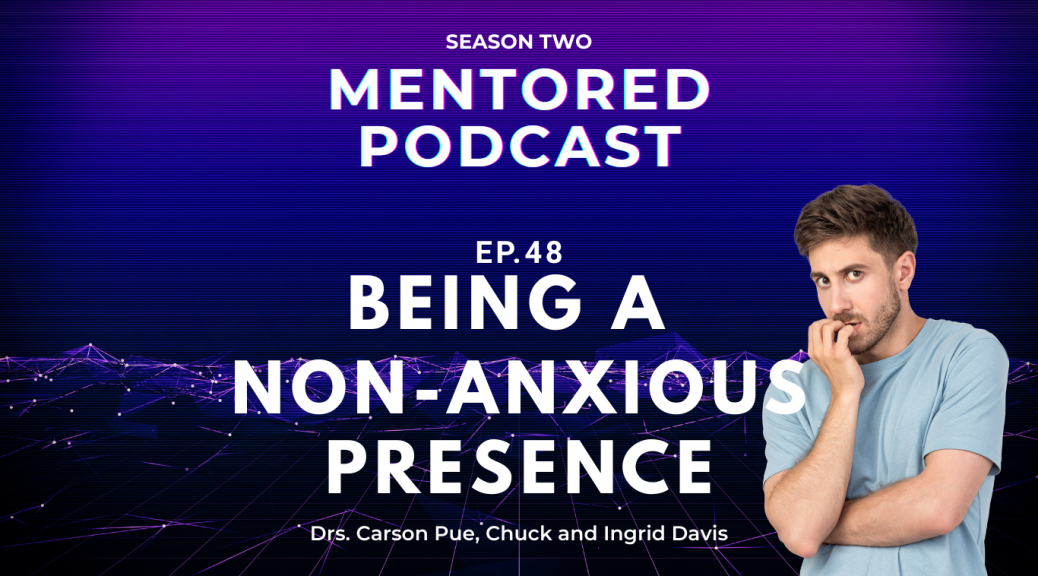
Ep. 48 Being a Non-Anxious Presence

Ep. 48 Being a Non-Anxious Presence

Anxiety is contagious. But so is calm. In this episode, we explore what it actually looks like for a leader to be a non-anxious presence — not by pretending everything is fine, but by being genuinely anchored when everything around them isn’t. What if the most important thing you carry into a room isn’t your strategy, but your steadiness? We unpack why anxious leaders create anxious cultures, what it costs an organization when the person at the top is always reacting, and the quiet discipline it takes to lead from a settled soul. This one will make you think honestly about what you’re really transmitting to the people around you.

Ep. 46 Resilience In Leaders

Ep. 46 Resilience In Leaders

Episode 46 shines a light on resilience as a major transformative force in leadership and life. Hosts Carson Pue, Ingrid Davis, and Chuck Davis redefine resilience—not just as bouncing back, but as bouncing forward, growing stronger through life’s challenges. They share heartfelt stories, practical wisdom, and spiritual insights to inspire listeners to embrace resistance as a gift that builds strength.

With themes of vulnerability, recovery, and continuous growth, this episode encourages everyone to see setbacks as stepping stones and to lead with courage, faith, and perseverance. Resilience isn’t perfection—it’s the power to keep moving forward.

Ep. 43 Dealing with Disappointment

Ep. 43 Dealing with Disappointment

In Episode 43 of the Mentored Podcast, hosts Carson Pue, Chuck, and Ingrid Davis address a reality that every leader eventually faces: the challenge of dealing with disappointment. Whether it stems from a missed opportunity, a personnel change, or a vision that didn’t materialize as planned, disappointment can be disorienting. This episode offers a compassionate and practical roadmap for navigating these difficult emotions with wisdom.

Rather than simply “pushing through” or burying the pain, the hosts encourage leaders to steward their experiences for growth. Key takeaways from this conversation include:

  • Managing Emotions: Why validating your grief is essential for emotional health and avoiding bitterness.
  • Reframing Setbacks: How to shift your perspective to see disappointment not as a failure, but as a step toward reorientation.
  • Applying Faith: Trusting in God’s ability to “recycle” our struggles into redemptive purposes and long-term fruitfulness.

If you are navigating a season of unmet expectations, we invite you to reflect on how these moments might be shaping your character. Tune in to the full episode for encouraging insights on building emotional resilience and turning lament into action.

Ep. 41 Family Work Balance

Ep. 41 Family Work Balance

In this episode of The Mentored Podcast, we dive into the delicate dance of balancing family and work. When life feels full in every direction, it’s easy to lose sight of what truly matters. We explore the signs of imbalance, the toll it can take on your relationships, and the wake-up calls that force us to reevaluate our priorities.

Through personal stories and practical insights, we’ll help you answer the question, “How is my family really doing?” and guide you toward creating space for what matters most. If you’ve ever felt stretched too thin, this episode is your reminder to pause, reflect, and realign.

Tune in to discover how to reclaim balance and build a life where both your family and career can thrive.

Ep. 39 Living With Your Feelings

Ep. 39 Living With Your Feelings

Ever notice how the most successful leaders aren’t necessarily the smartest ones in the room? They’re often the ones who’ve mastered something we rarely talk about in leadership circles—their emotions.

In this raw and insightful episode, Carson Pue, Chuck, and Ingrid Davis tackle the uncomfortable truth about emotional intelligence in leadership. Chuck opens up about his Midwestern upbringing, where feelings were seen as “unpredictable” and “no good”—a mindset that nearly sabotaged his marriage and ministry. You’ll hear Carson’s vulnerable story about his unexpected anxiety attacks and how his doctor’s refusal to prescribe medication led to a breakthrough therapy session involving… well, let’s just say dinosaur imagery played a role. Ingrid shares her research on “holistic holiness” and why ignoring our inner world stunts our spiritual growth.

The conversation explores practical strategies like the WAIT acronym (Why Am I Talking?), the difference between being an emotional thermometer versus thermostat, and why Jesus’ tears matter more than you might think. They discuss the unique challenges female leaders face with emotions and how to create healthier team cultures.

This isn’t about becoming more touchy-feely—it’s about becoming more effective. Because here’s the thing: if you can’t understand what’s happening inside you, how can you truly lead others?

Ready to explore the intersection of faith, feelings, and leadership? Listen now at mentoredpodcast.net | Subscribe on your favourite podcast platform | Share with a fellow leader who needs to hear this.

What’s one emotion you’ve been avoiding as a leader?